CLOUD IXROOFING & RESTORATION
Call or text 346-576-0412 CallText

Home · Service areas · Pearland, TX

Roofing in Pearland, TX

Pearland sits in the path of Gulf storms and summer wind. We inspect storm-damaged roofs, tarp them to stop leaks, and document everything your insurance company needs for the claim.

  • Insurance claim specialists
  • Emergency tarps
  • Residential & commercial

Our work in Pearland

Pearland roofing projects

Real jobs from Pearland, photographed start to finish. Tap any photo to see it full size.

Storm & insurance · 20 photos

Storm Damage: Emergency Tarp, Hail and Wind Insurance Claim

Wind lifted and unsealed shingles across the roof and water reached the interior. We tarped the damaged section to stop the leak, documented the roof and interior damage for the hail and wind claim, then tore off and rebuilt the roof.
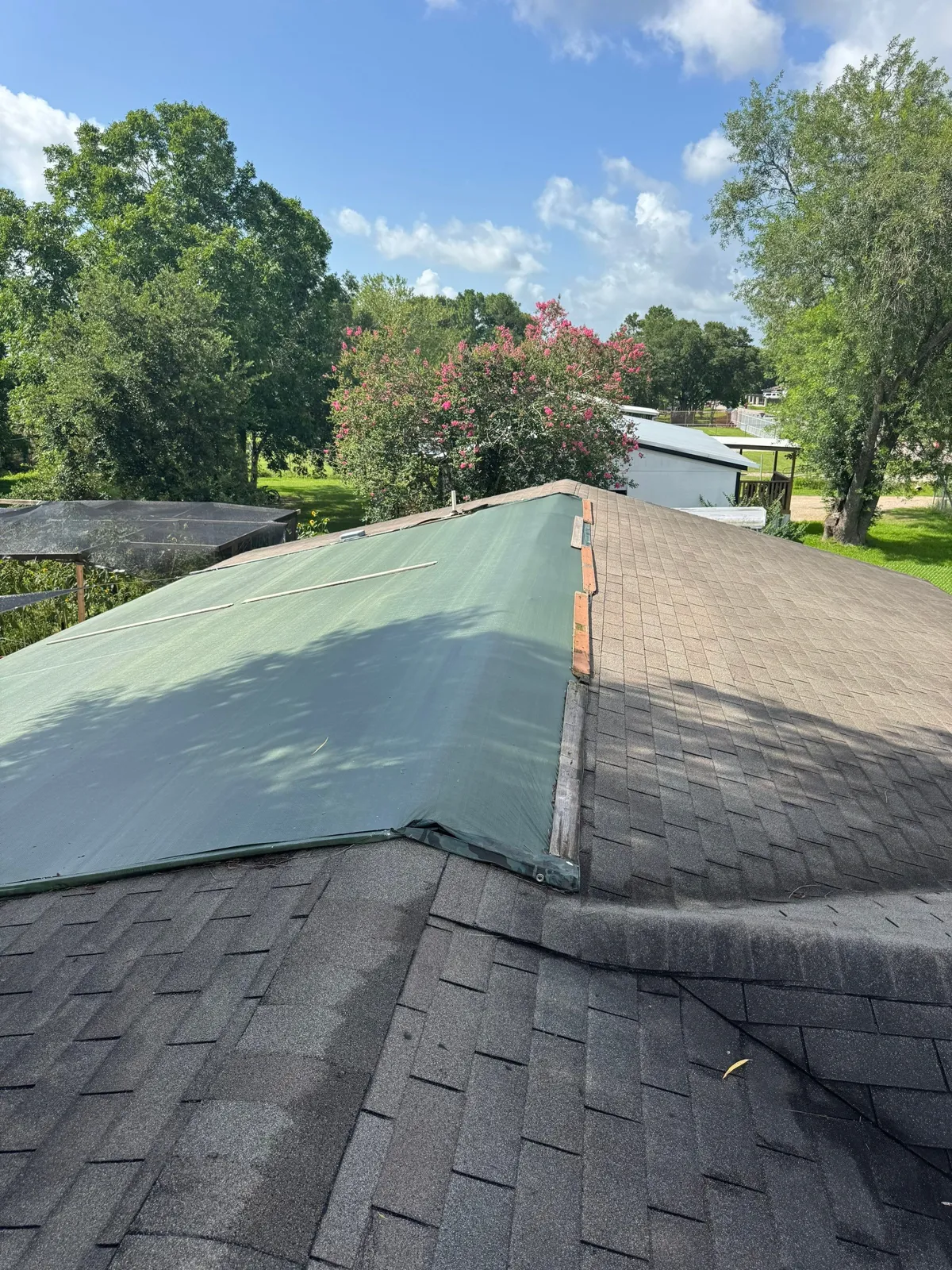
Emergency roof tarp on a storm-damaged home in Pearland, Texas. Cloud IX covered the wind-damaged slope with a heavy green tarp, fastened along the ridge cap and edges so it holds through the next rain. The opposite slope still shows the original asphalt shingles for comparison. Tarping right after a storm stops water from reaching the decking, insulation and drywall, and most homeowner policies expect you to take reasonable steps like this to prevent further damage while the insurance claim is filed.
Tarp · Damaged section tarped to keep water out
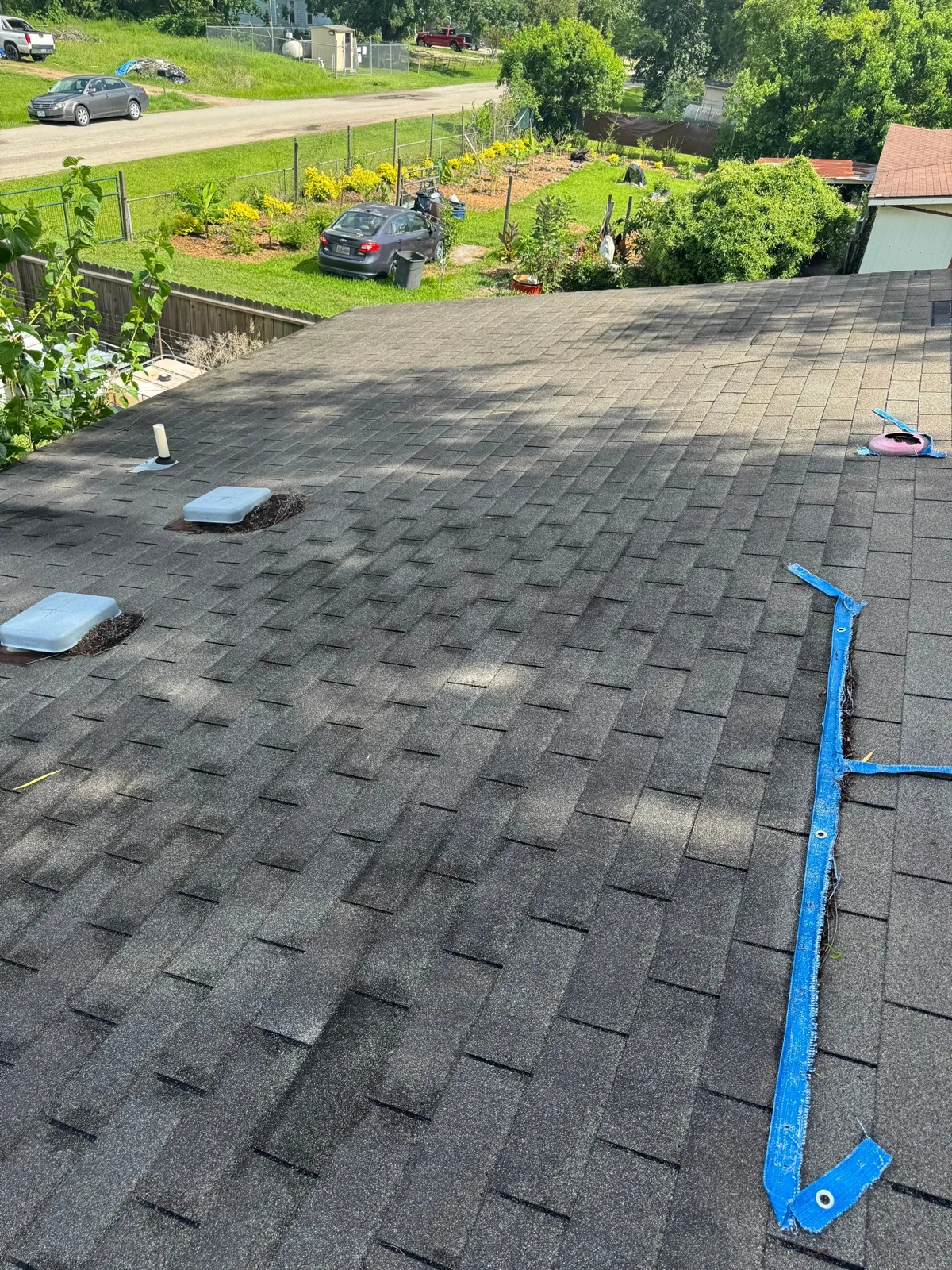
Close view of the tarp strapping running down the roof slope beside the ridge on the Pearland home. Strapping anchors the temporary cover so wind cannot get underneath it and peel it back, which is the most common way a do-it-yourself tarp fails. Box vents and a plumbing pipe boot are visible in the shingle field. The tarp stayed in place to protect the home while the hail and wind insurance claim was documented and approved.
Tarp · Tarp strapping along the roof slope
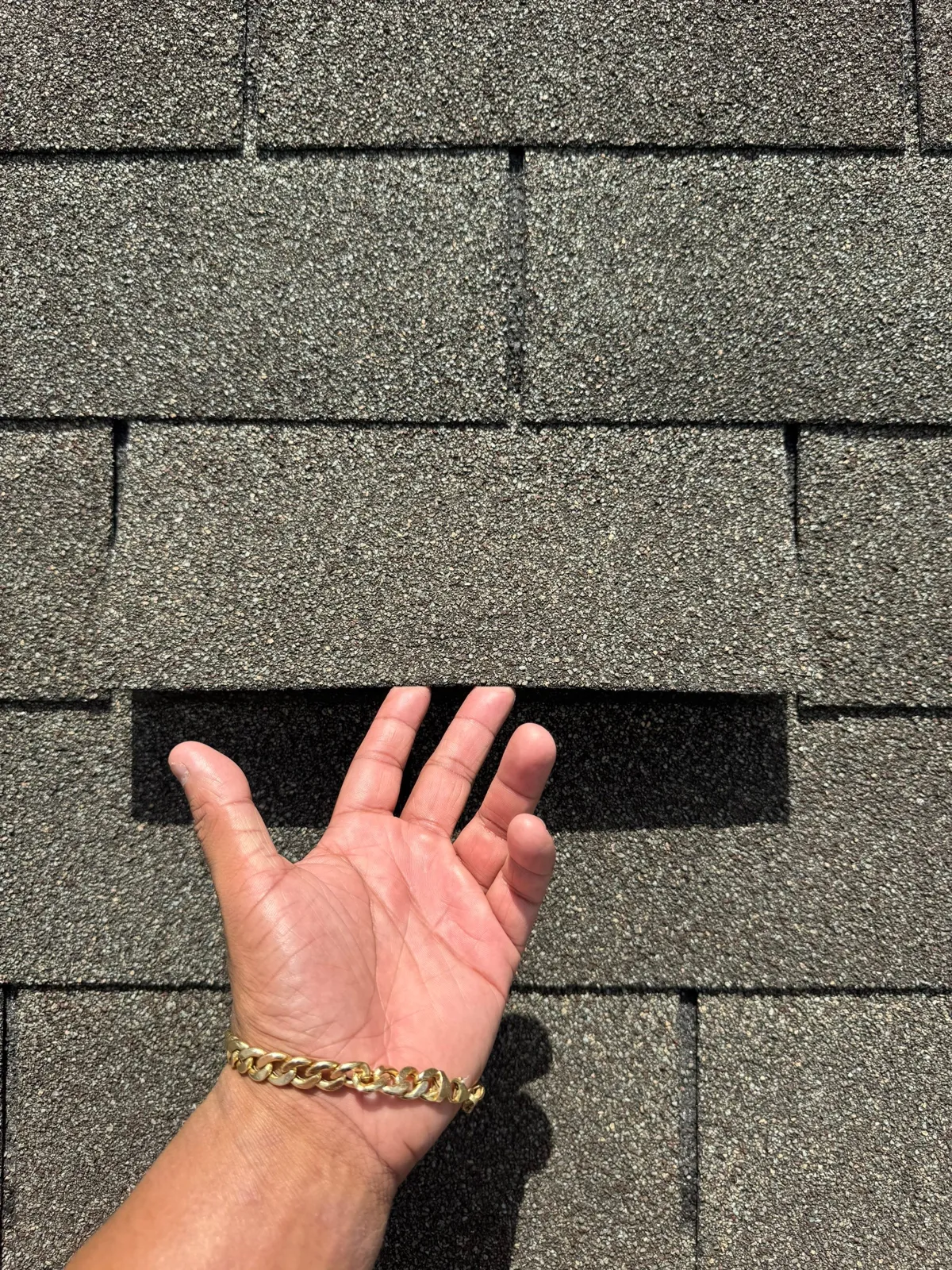
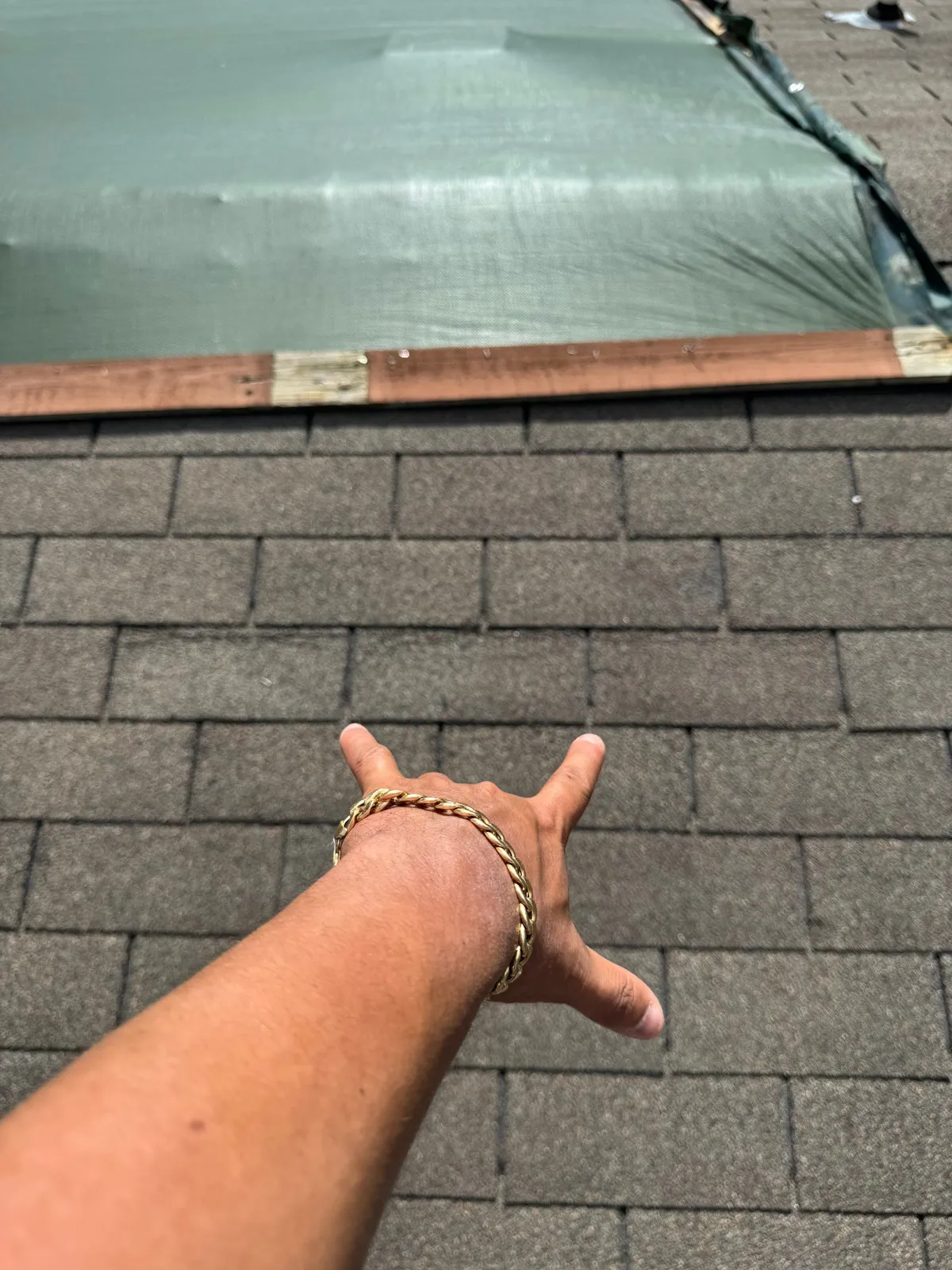
Wind damage found during a free roof inspection in Pearland, TX: a hand slides under an asphalt shingle tab that high winds pulled loose from its adhesive seal strip. Shingles are designed to bond to the course below them; once that seal breaks, the tab can lift and flap in every storm, letting wind-driven rain reach the underlayment and decking. Unsealed tabs are a key piece of evidence insurance adjusters look for when evaluating a wind damage claim.
Inspection · Shingle tab lifted by wind, no longer sealed
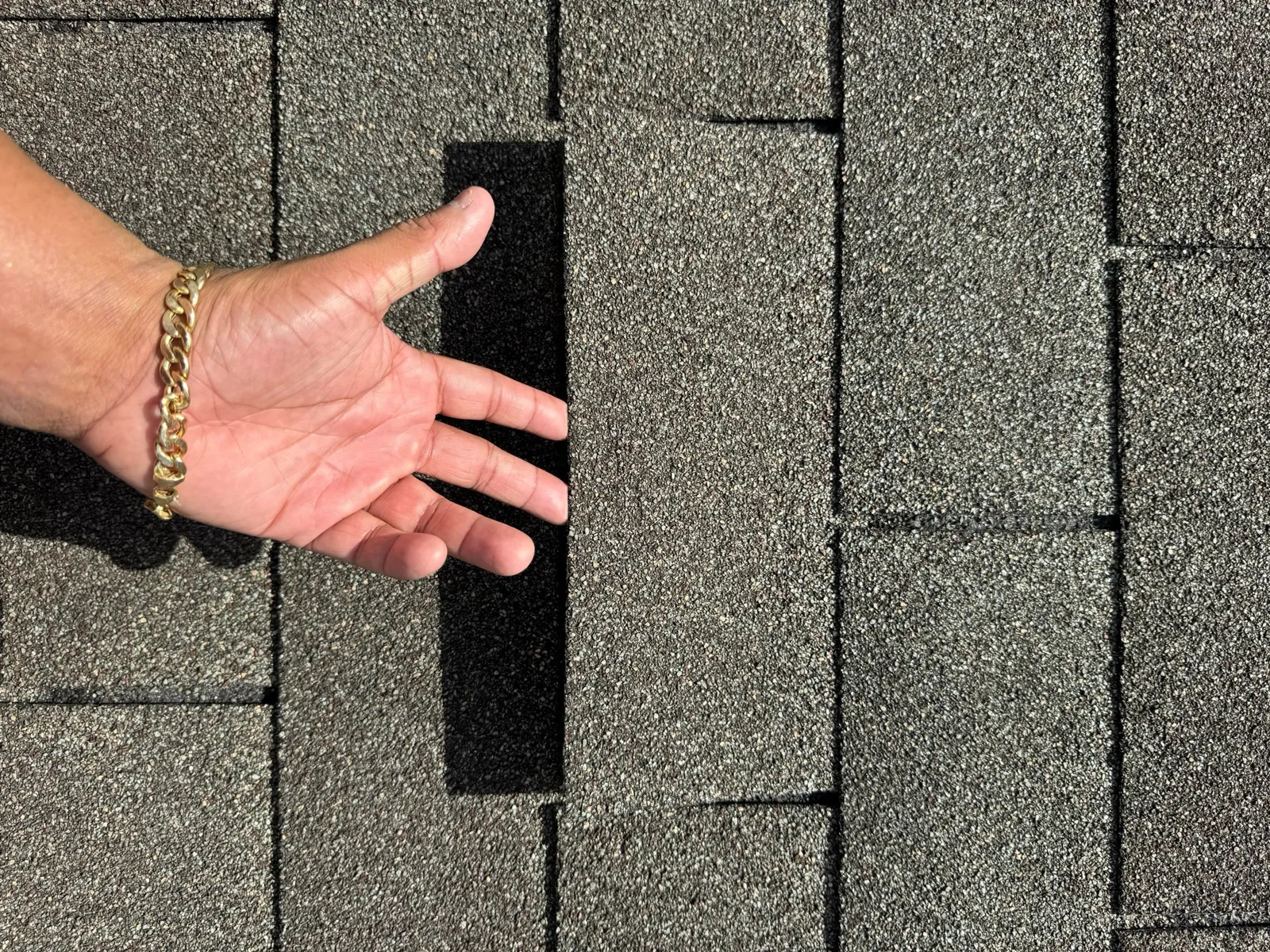
An unsealed shingle lifted to expose the open seam and bare seal line underneath it. When this pattern repeats across many tabs on several slopes, it points to storm-wide wind damage rather than normal aging, which matters for whether an insurance company approves repair or full replacement. Cloud IX photographs each damaged tab with a hand for scale so the homeowner and the adjuster can see exactly what was found.
Inspection · Unsealed shingle lifted to show the open seam
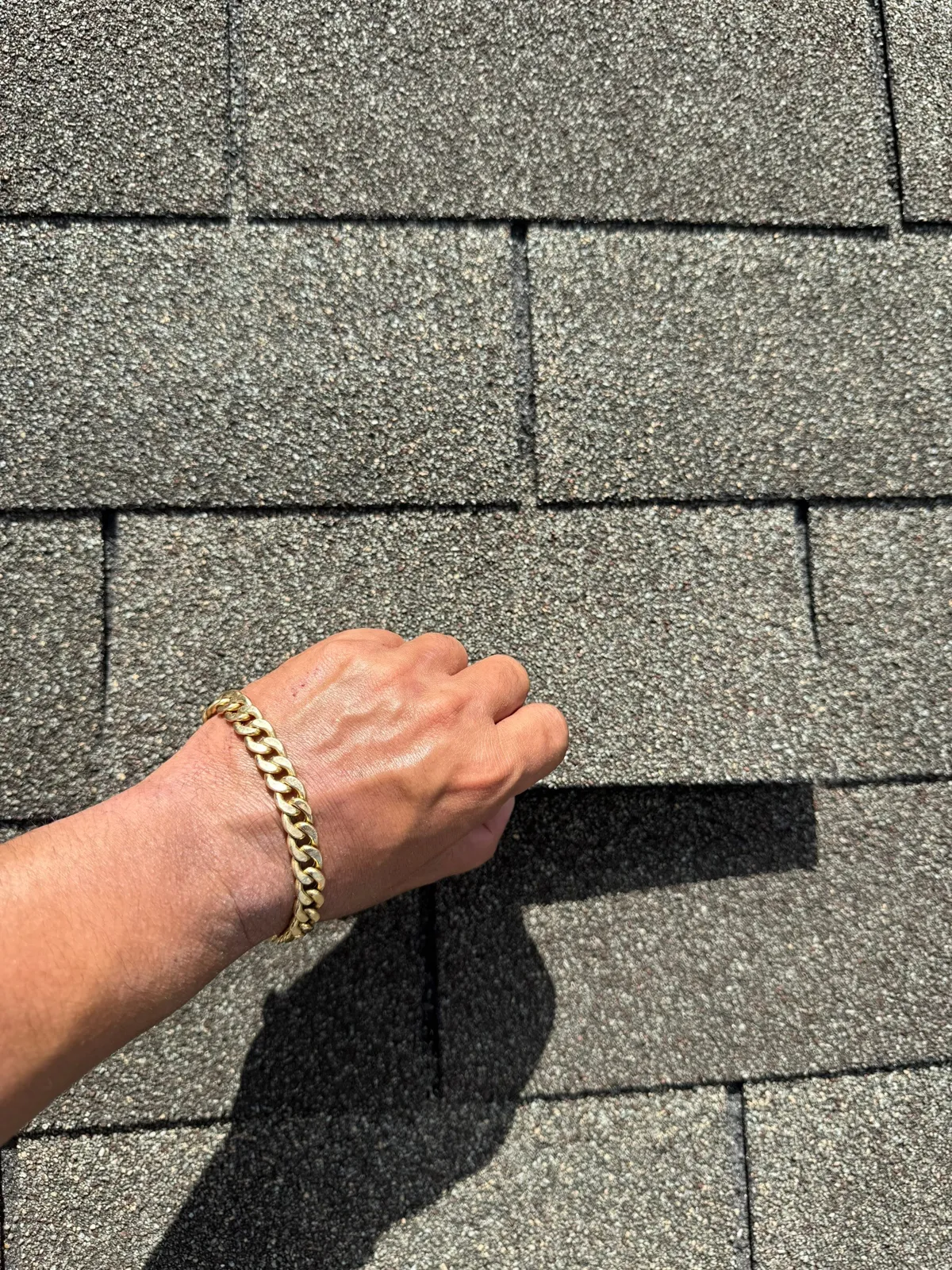
A loose shingle tab lifts freely by hand on the Pearland roof because the adhesive bond failed during high winds. A shingle that moves like this can no longer shed water the way it was designed to, and the repeated flexing cracks the mat over time. Many wind-damaged roofs look fine from the street, which is why a hands-on and drone inspection is the only reliable way to find damage like this after a Houston-area storm.
Inspection · Loose shingle tab lifted by hand
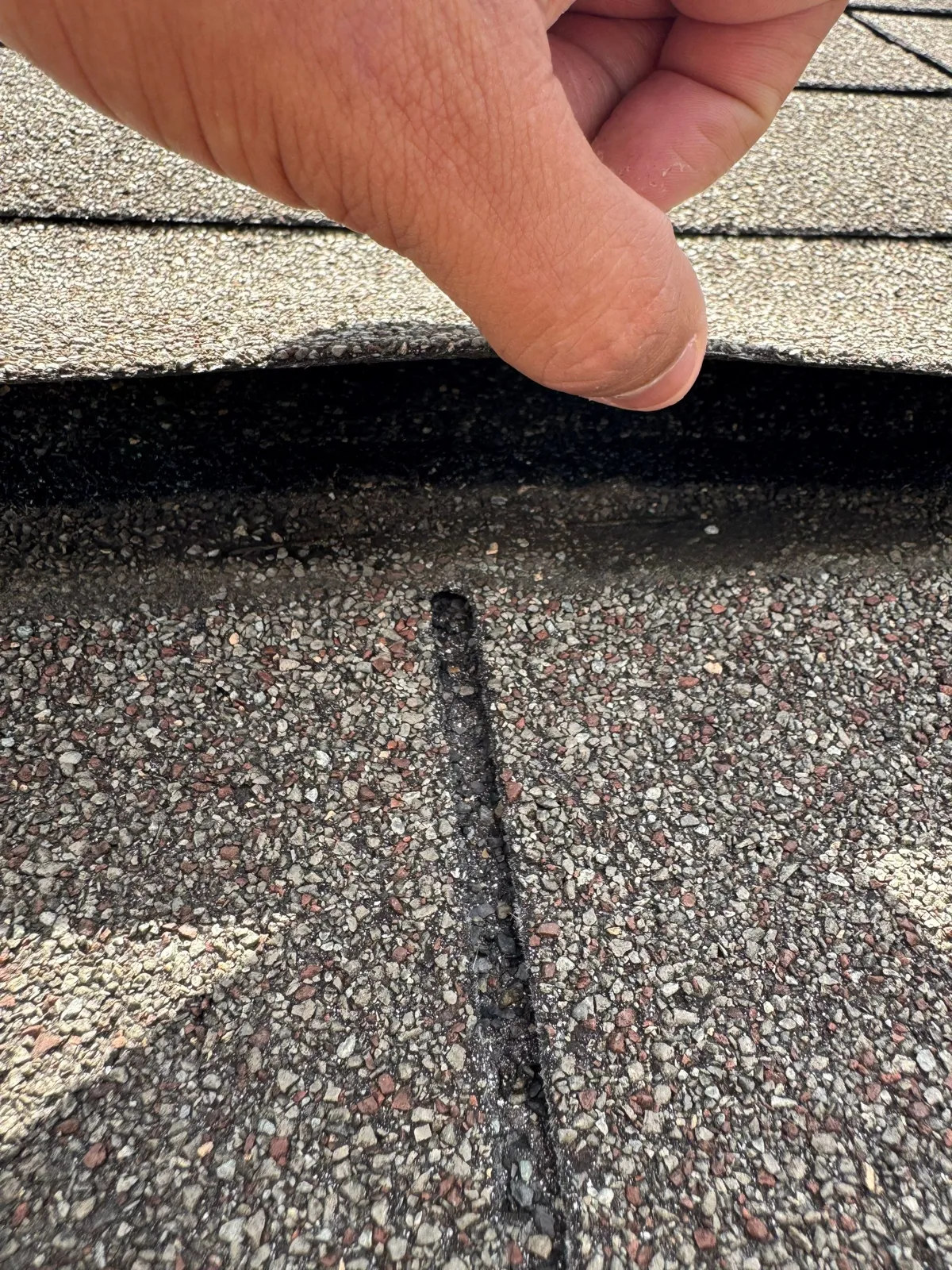
Close-up of a creased asphalt shingle with a broken seal strip and loose granules. Creasing happens when strong wind folds a shingle tab back over itself; the bend line permanently weakens the shingle even after it lies flat again, so creased tabs are treated as damaged rather than repairable. Documenting creases, broken seals and granule loss together helps establish the full scope of storm damage for an insurance claim in Pearland, Texas.
Inspection · Creased tab with a broken seal strip
Wind-lifted shingles along the edge of the emergency-tarped section, photographed with a hand for scale. Neighboring tabs show the same lifting pattern, which indicated damage across the whole roof instead of a single blown-off spot. Evidence spread across multiple slopes is often what moves a claim from a small spot repair to a full roof replacement, so Cloud IX documents every slope during the inspection.
Inspection · Lifted shingles next to the tarped section
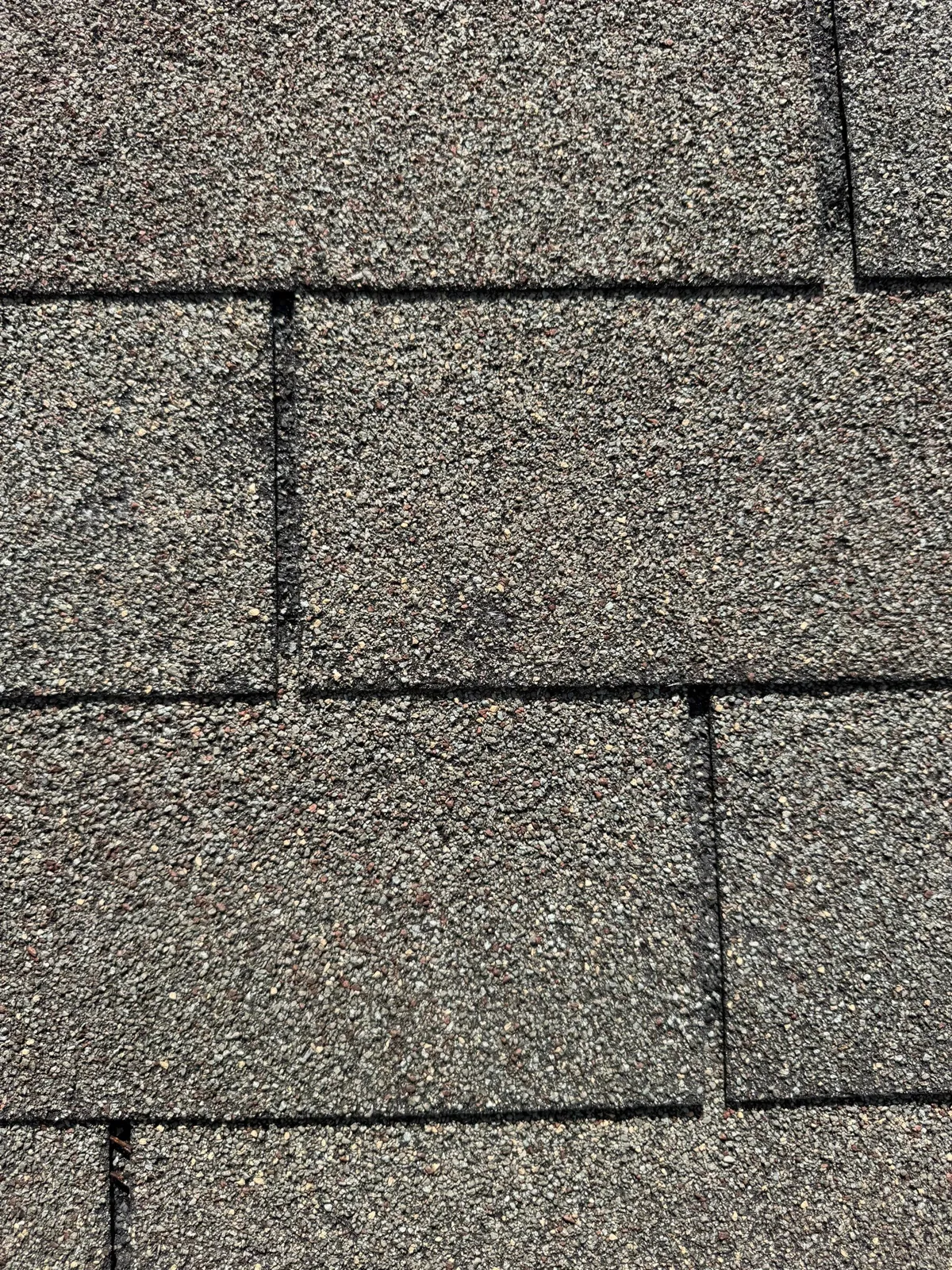
Detailed close-up of the shingle surface showing granule loss and gaps at the tab joints, recorded during the full-roof inspection for the insurance file. Granules protect the asphalt from UV and heat, and storm impacts or wind scouring can strip them away, shortening the roof's life. Close-up photos like this give adjusters and homeowners a clear, dated record of the roof's condition at the time of the storm.
Inspection · Close-up of worn shingle surface
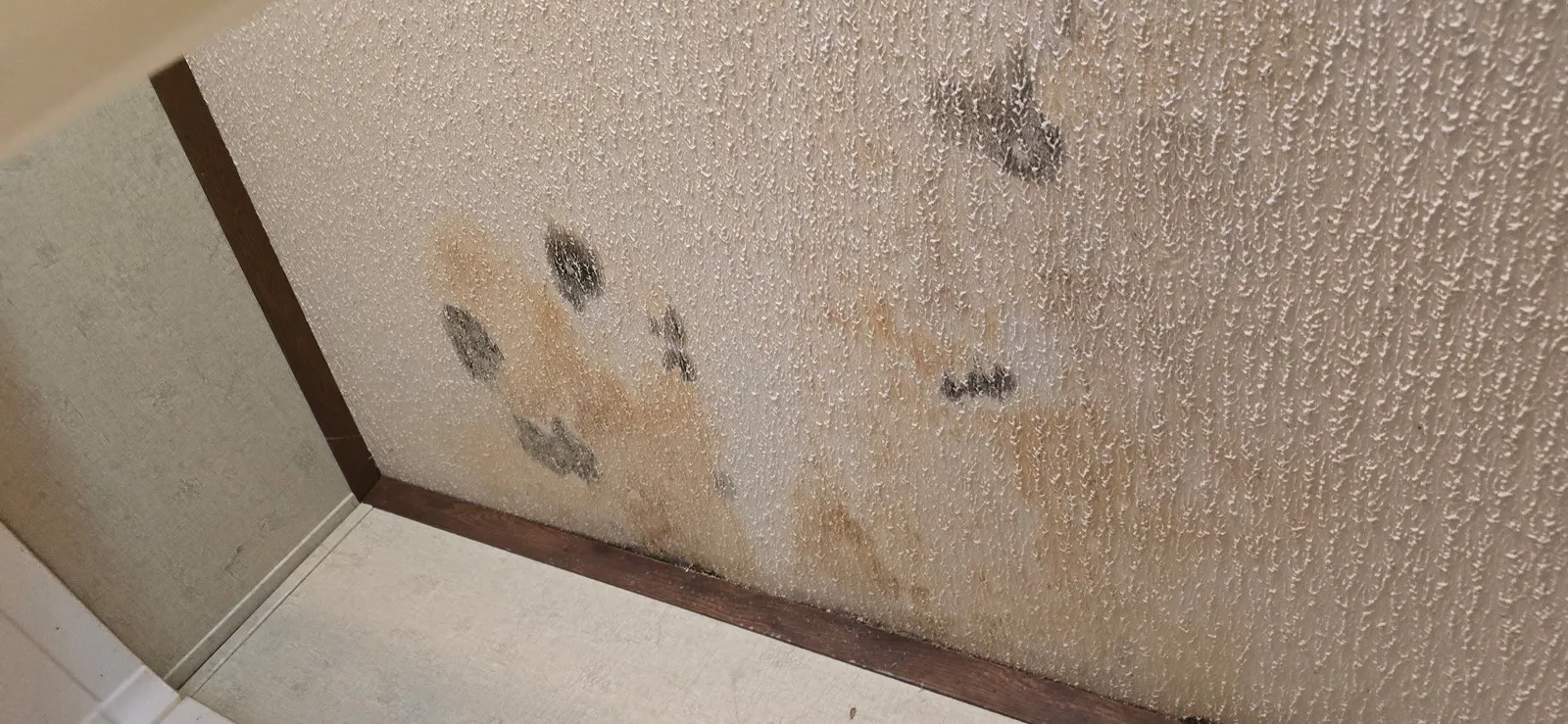
Interior water damage from a roof leak in a Pearland, Texas home: brown water stains and dark spotting spread across the wall below the damaged section of roof. Spotting like this can signal mold growth starting inside the wall cavity. Interior damage photos are an important part of a storm insurance claim because they show the roof damage had already allowed water into the living space.
Interior · Water staining on the interior wall
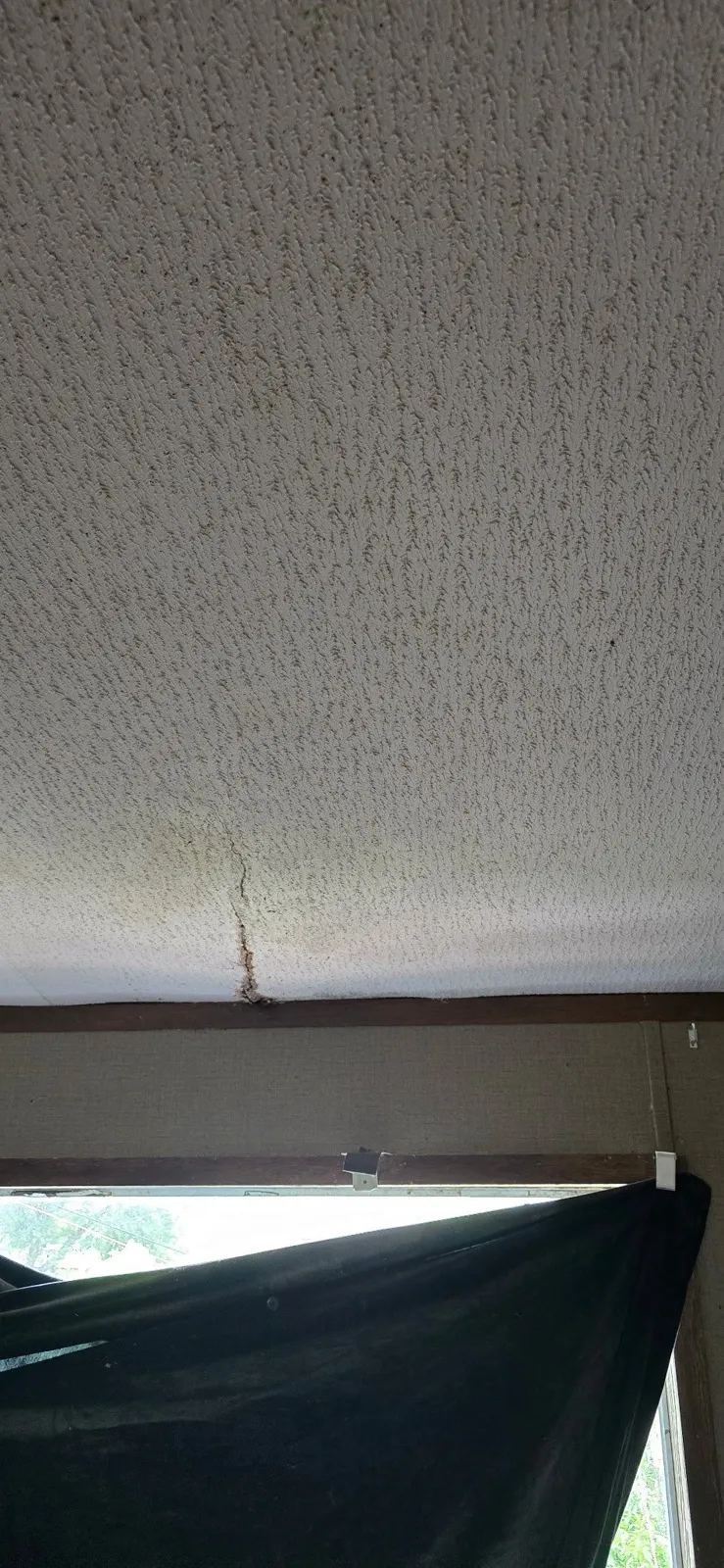
A crack runs through the textured ceiling with a brown water stain along it, marking where leaking rainwater collected above the drywall. Ceiling stains and cracks are often the first sign homeowners notice of a roof leak, sometimes weeks after the storm that caused it. Photographing them right away helps connect the interior damage to the roof damage in the insurance claim.
Interior · Ceiling crack and stain from the leak
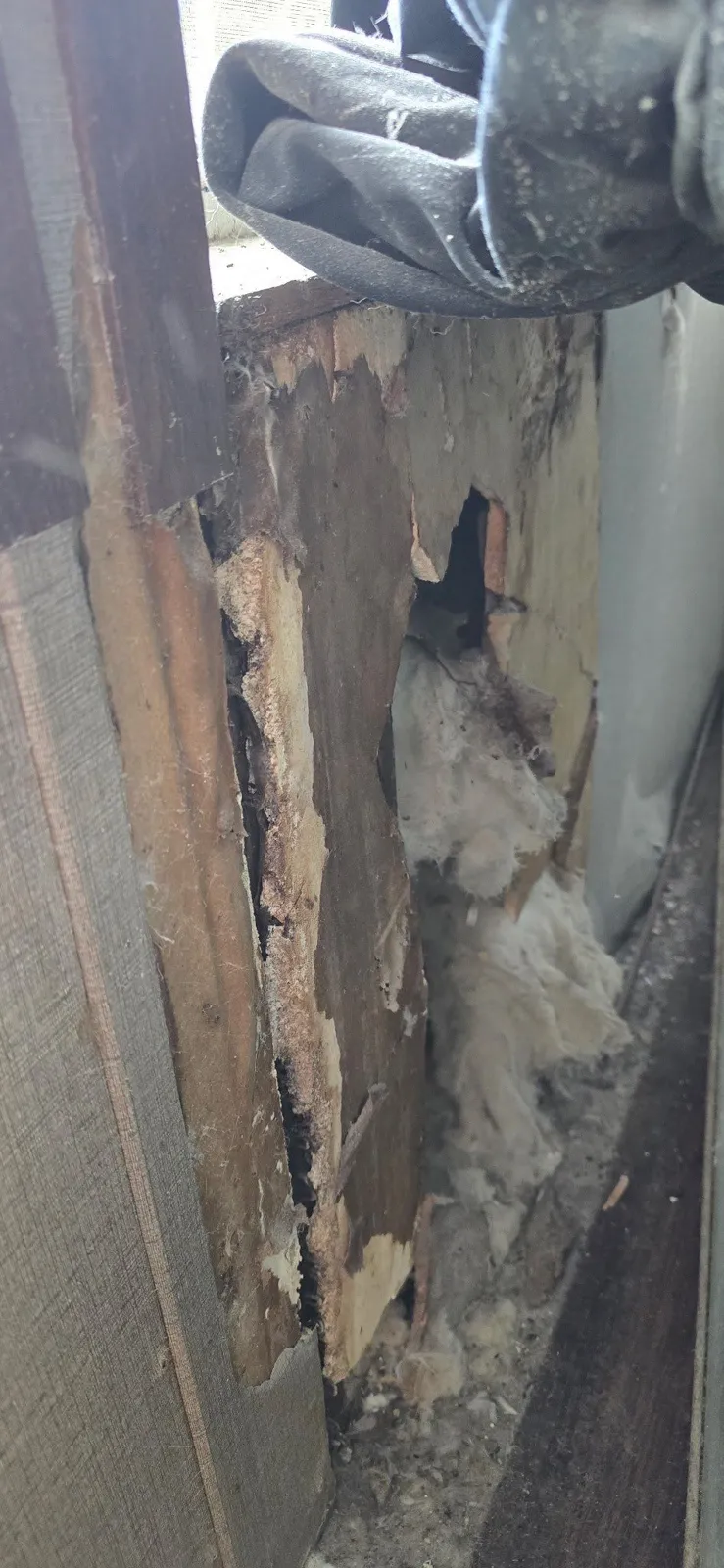
With the wall opened up, the wood framing and insulation behind it show rot and saturated, deteriorating insulation from the ongoing roof leak. This kind of hidden damage stays out of sight until the wall is opened, which is why a small roof leak should never be ignored. Documenting it supports the interior portion of the claim and shows why replacing the roof, not just patching it, was necessary.
Interior · Water-damaged framing and insulation behind the wall
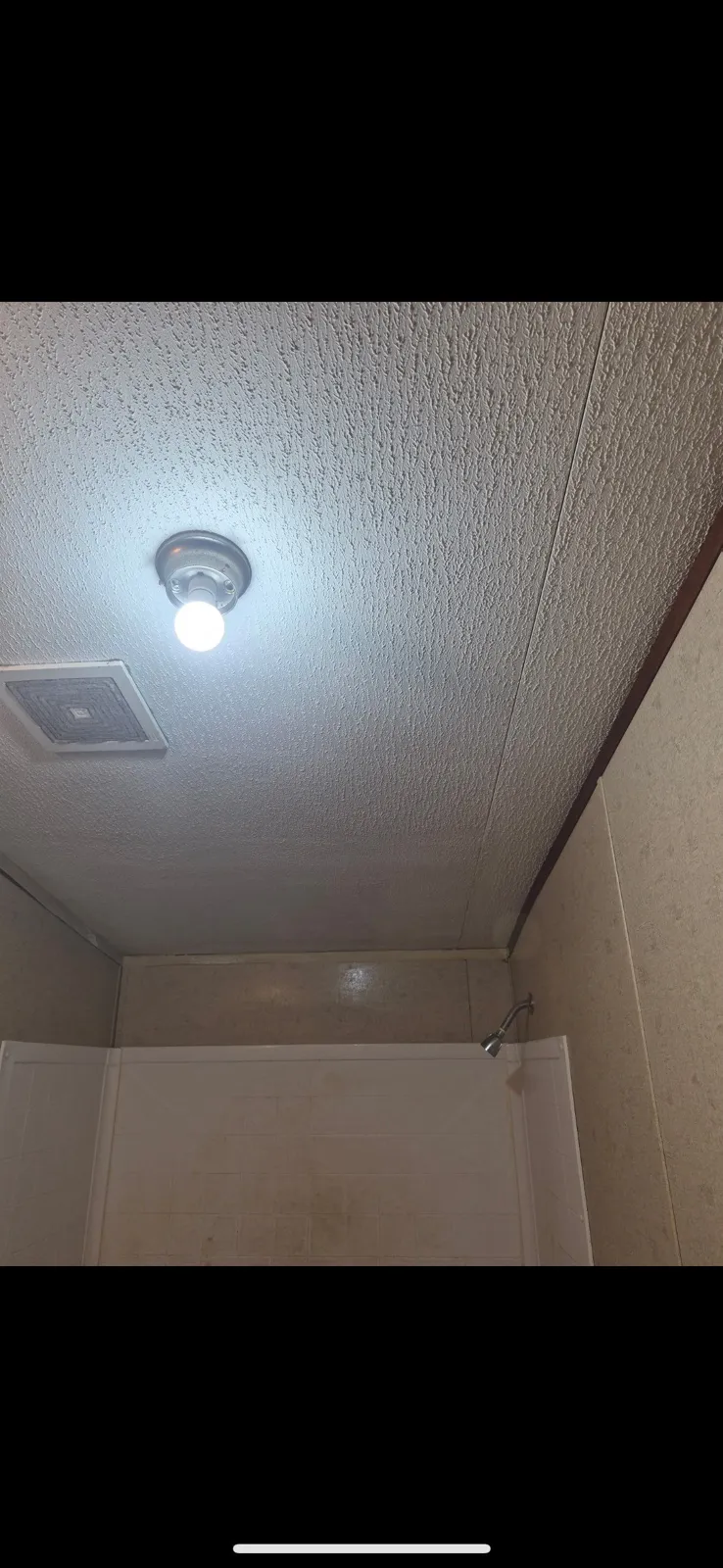
The same home's interior after the roof replacement and interior repairs, with clean, finished ceiling panels where water damage had been. With the new roof sealing out water, the interior repairs can last. A finished photo like this closes the loop on the project record for the homeowner and the insurance company.
Interior · Interior after the repair
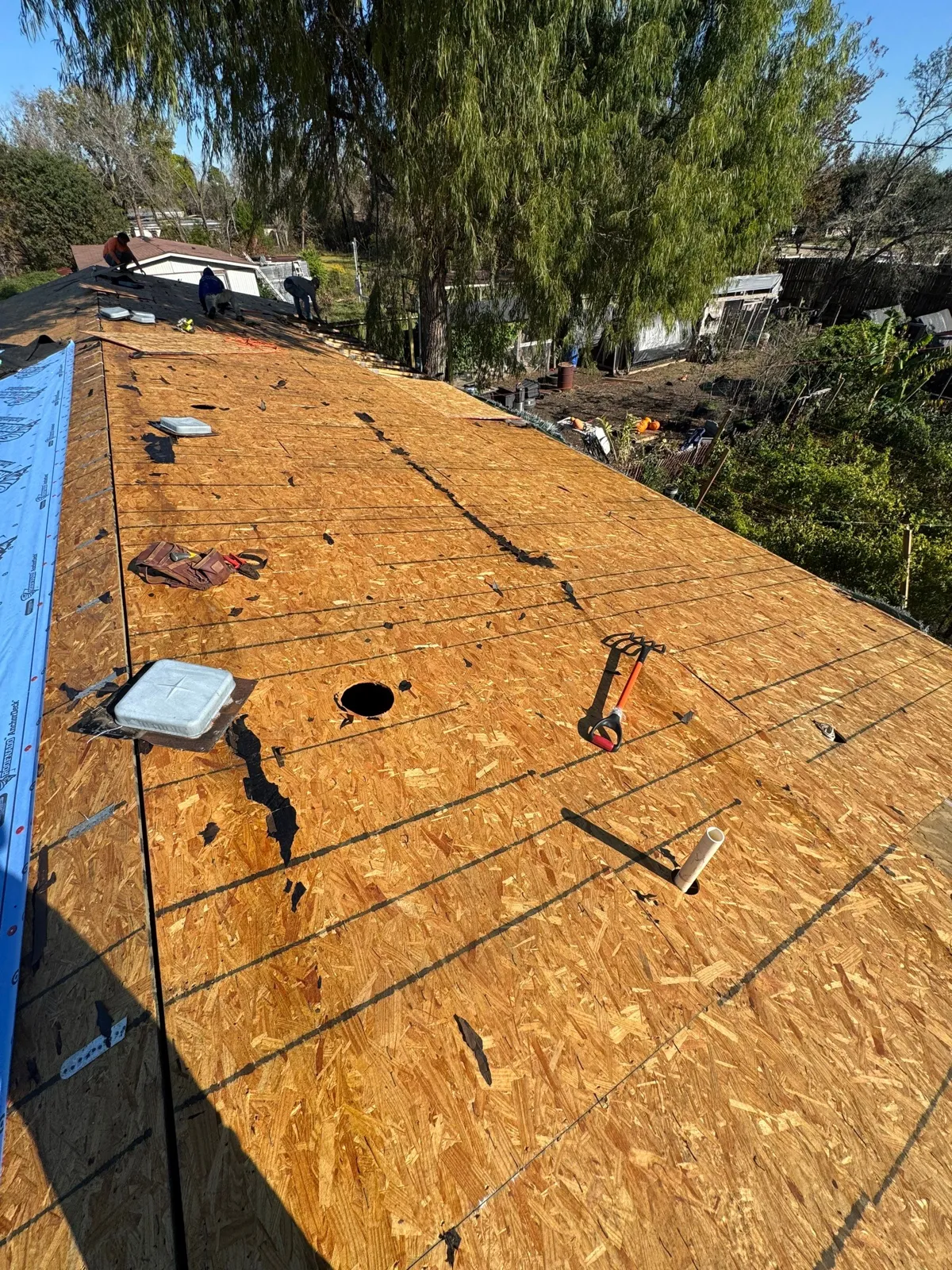
Roof replacement in progress in Pearland, TX: new OSB roof decking installed after the old shingles and water-damaged boards were torn off. Replacing soft or rotted decking gives the new shingles a solid surface to nail into, which matters for wind resistance. Openings for roof vents are already cut, and synthetic underlayment is starting along one edge.
Build · New decking after the tear-off
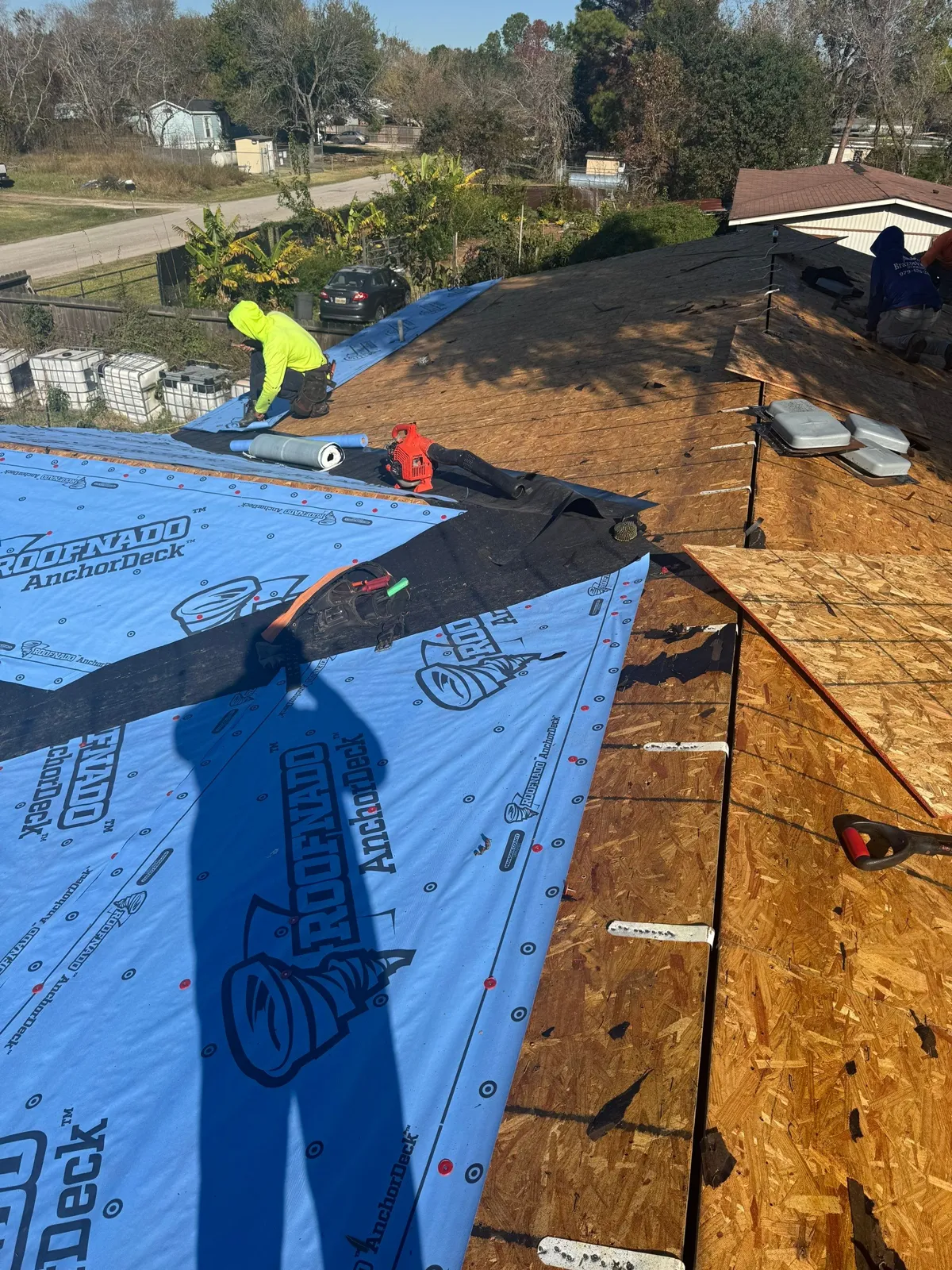
A Cloud IX crew member rolls synthetic underlayment over the new decking during the roof replacement. Underlayment is the secondary water barrier beneath the shingles, and it keeps the home dry during the build and protects it for the life of the roof if a shingle is ever damaged. The new decking and underlayment go down in the same day so the home is never left open to weather.
Build · Underlayment rolled out over the new decking
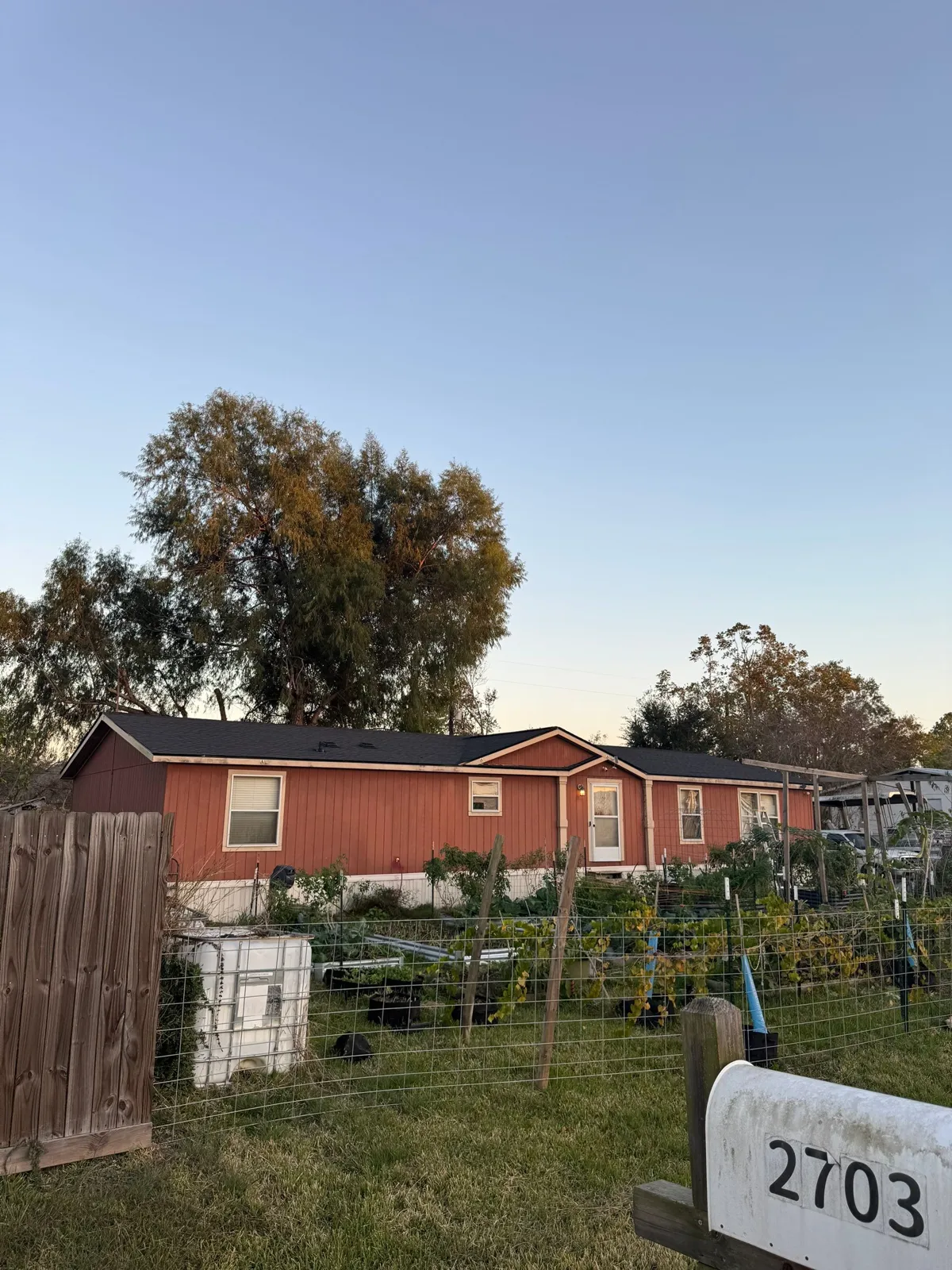
The completed roof replacement on the Pearland home at sunset, with new dark asphalt shingles across the full roofline and the yard cleaned up after the build. This is the end result of the hail and wind insurance claim: emergency tarp, inspection and documentation, tear-off, new decking and underlayment, and a new roof installed by Cloud IX Roofing & Restoration.
Build · Finished roof
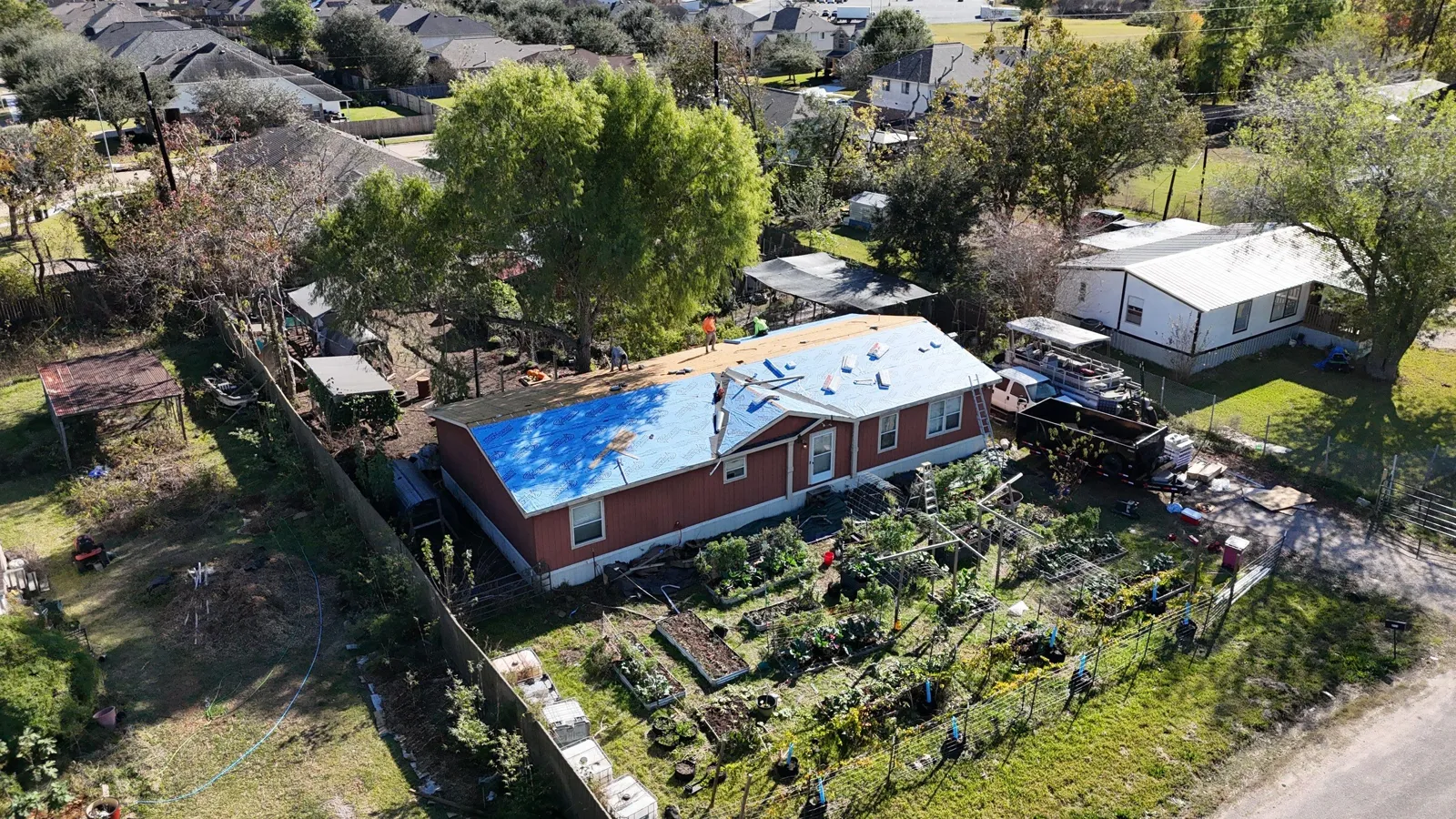
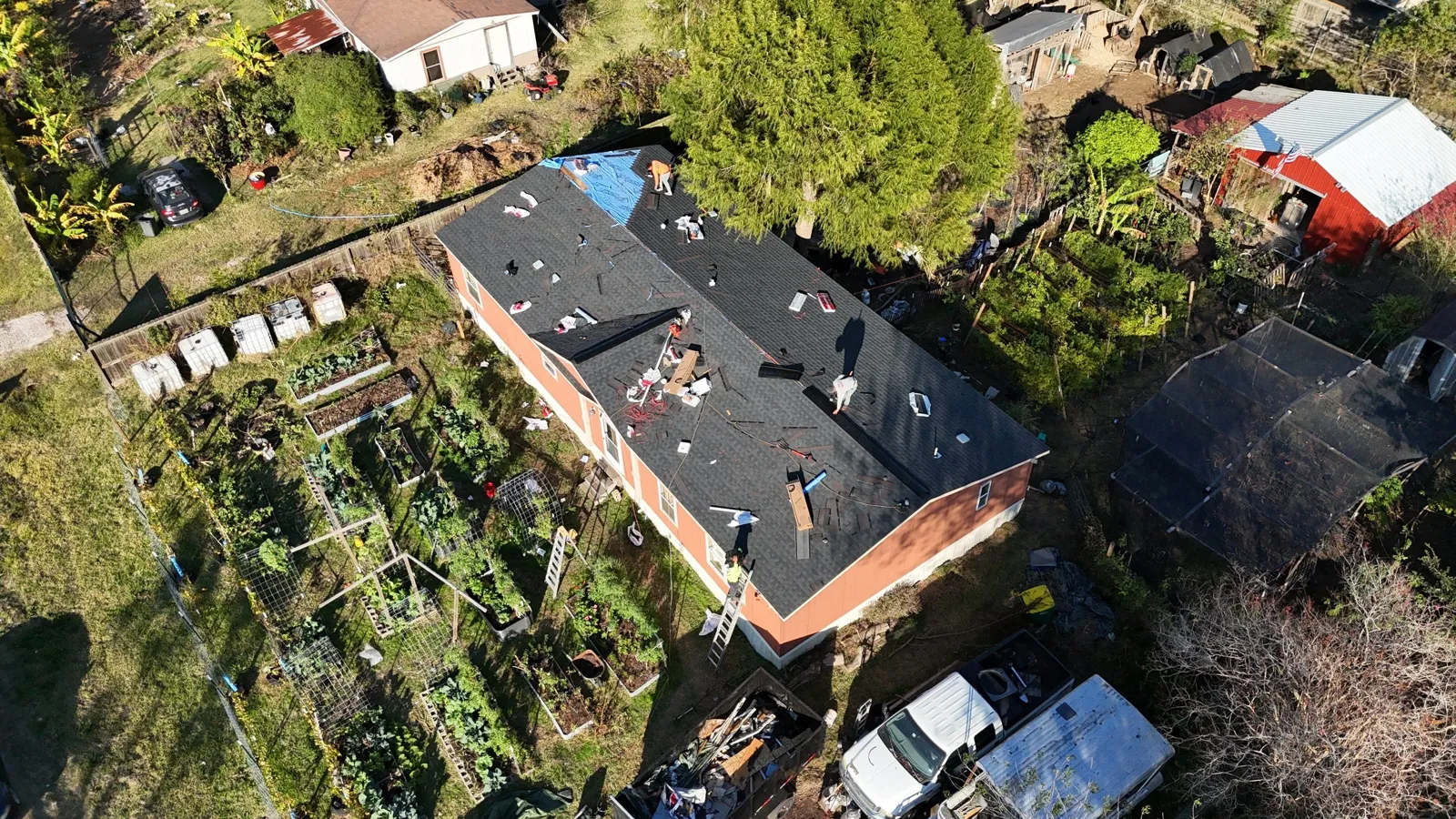
Drone photo of the whole property during the roof replacement in Pearland, Texas, with blue synthetic underlayment covering the roof, garden beds in the backyard and the surrounding neighborhood. Aerial photos show the full scope of a roofing project at a glance and give homeowners a view of their roof they never get from the ground. Cloud IX uses drone photography on inspections and builds to document every slope.
Drone · Full property view mid-build
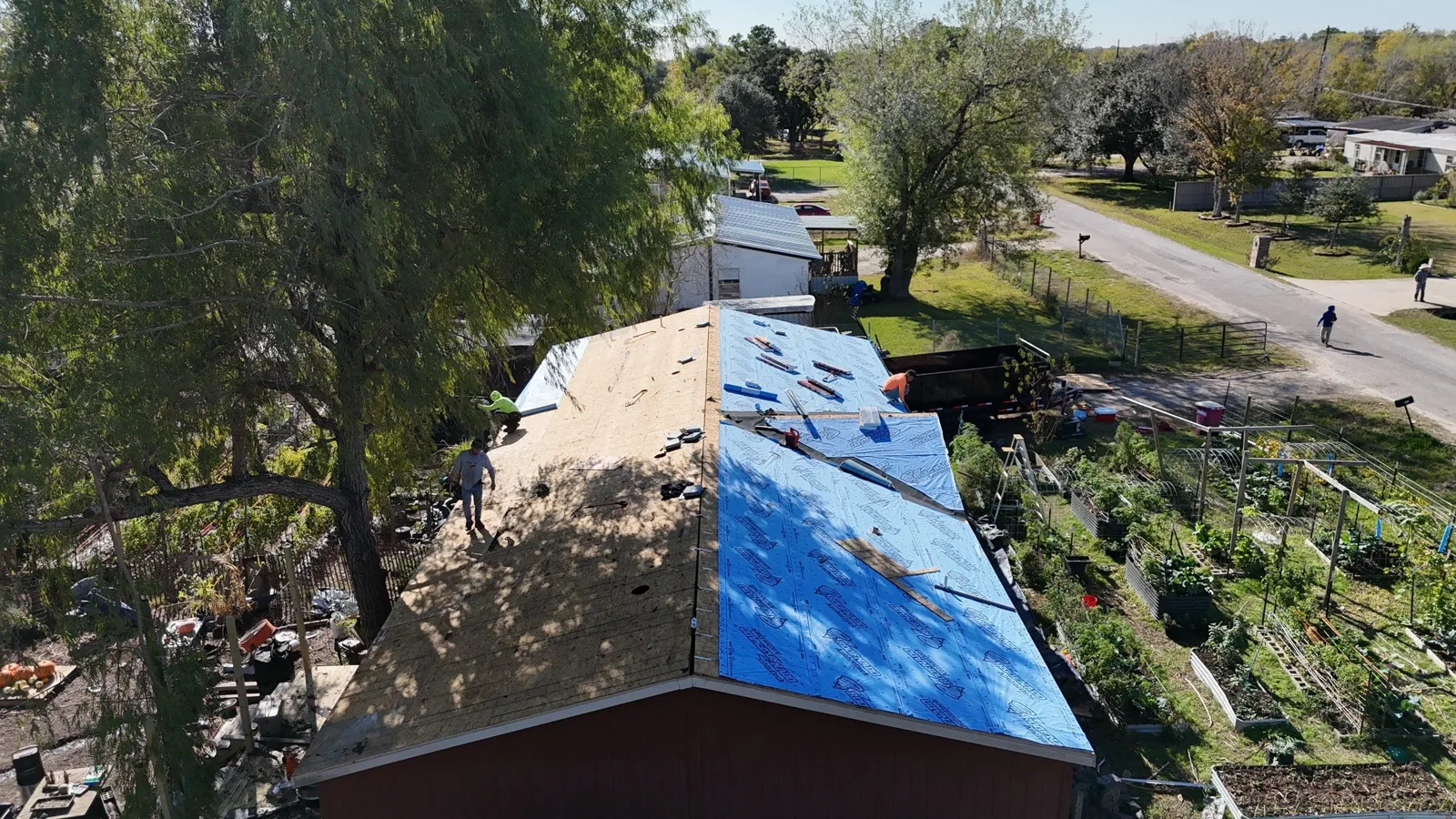
Aerial view looking down the roofline: bare decking on one slope while the other is already dried in with underlayment. Tearing off and drying in a roof in stages means the home is never left fully exposed if weather moves in, a practical concern during Houston-area storm season. The drone shot also shows crew members working safely along the ridge.
Drone · Tear-off on one side, underlayment on the other
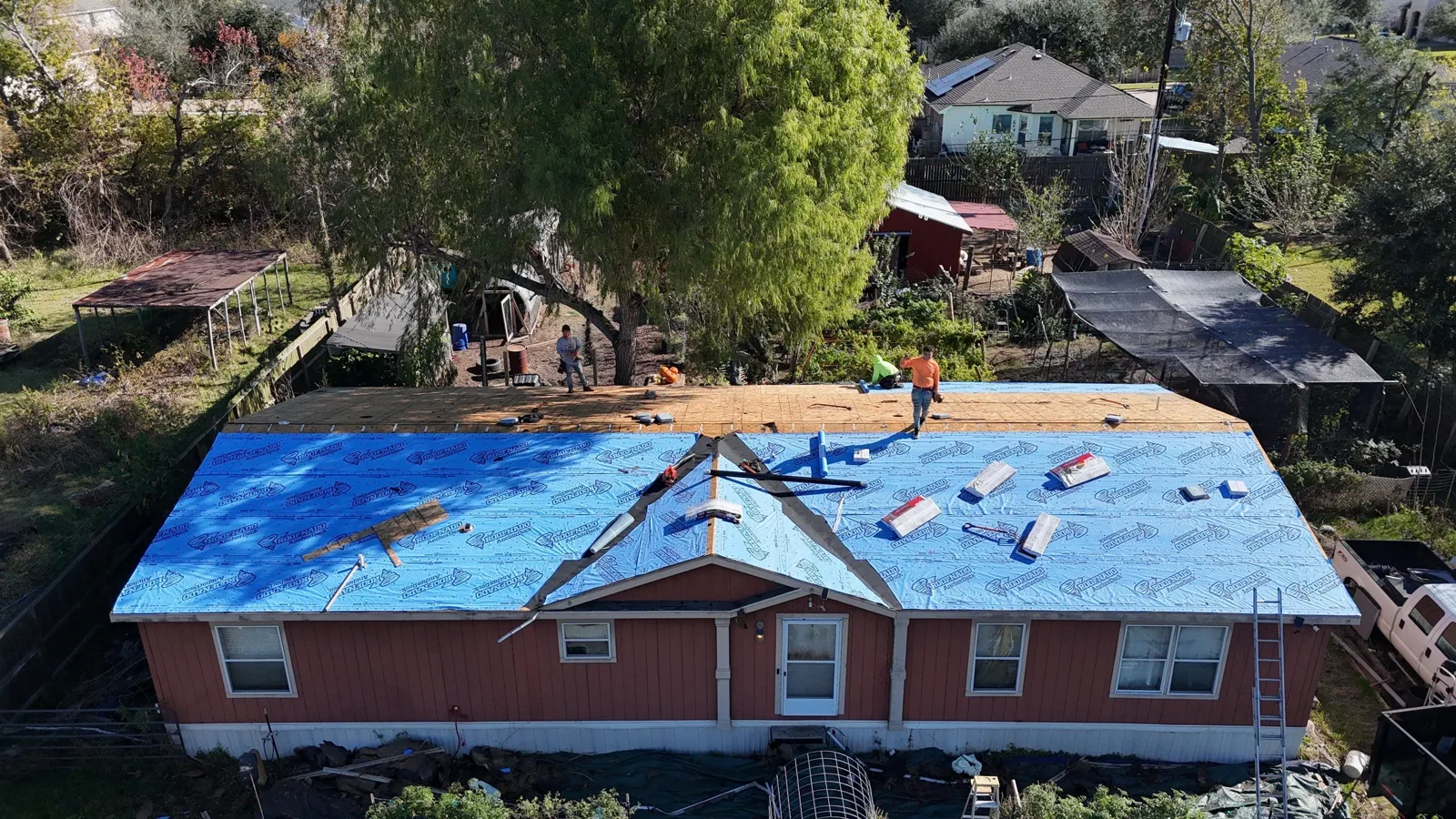
From the drone, the front gable and main roof of the Pearland home are wrapped in synthetic underlayment while the crew works along the ridge. Gables, valleys and the transitions between roof sections are where leaks most often start, so getting underlayment and flashing right in these areas is a key part of a quality roof replacement.
Drone · Underlayment and front gable from above
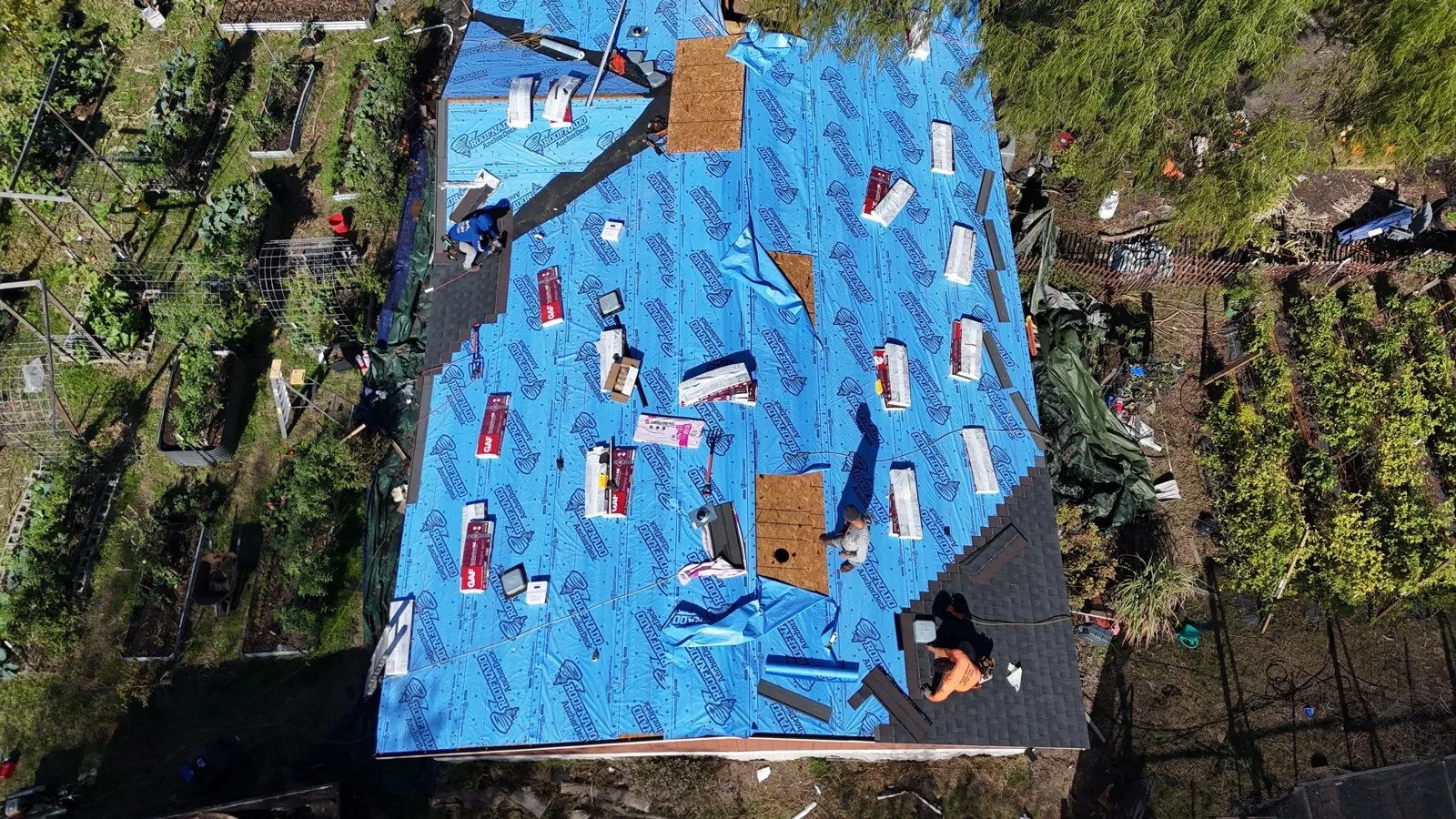
Overhead drone photo with the underlayment fully installed and shingle bundles staged across the roof, ready for installation. Spreading bundles across the slopes before shingling keeps the crew moving efficiently and avoids overloading one area of the roof. Shots like this show the homeowner exactly where the project stands, even if they are at work during the build.
Drone · Underlayment down with shingle bundles staged
Shingles going on, seen from the drone: new dark asphalt shingles cover most of the Pearland roof as the crew finishes the final sections near one end. Overhead photos let Cloud IX check shingle lines, coverage and cleanup from above before the final walkthrough with the homeowner.
Drone · Shingles going on, seen from above

Neighborhoods

Where we work in Pearland

Including Shadow Creek Ranch, Silverlake and the Highway 288 corridor. If you're nearby and don't see your neighborhood, call us anyway.

Roofing services in Pearland

  • Residential roofing. Full replacements with architectural shingles, metal and impact-rated options, matched to your home and HOA.
  • Commercial roofing. TPO, modified bitumen and metal for retail, office and multi-family buildings, with work scheduled around your tenants.
  • Storm & insurance claims. Hail and wind damage documented with drone photos, and a clear path through your claim from inspection to rebuild.
  • Repairs & leaks. Missing shingles, flashing, pipe boots and leaks fixed fast, before a small problem turns into ceiling damage.
  • Gutters. Seamless gutters and downspouts installed or replaced so water leaves your roof and foundation the right way.
  • Drone roof inspections. Every slope photographed from above, with damage marked and a report you can share with your insurance company.